By Editorial Hunter House · 29 September 2026
The origin of that choice is a neighbourhood story. In the 1980s, the empty lot in Jardim Europa was earmarked for a shopping centre. Residents organised against the plan and argued for a cultural venue in its place. The proposal prevailed, and the site was set aside for a museum devoted to sculpture.
The design came out of a closed competition won by Paulo Mendes da Rocha. Construction began in 1988 and the museum opened in 1995, after almost a decade of construction. Eleven years later, in 2006, the architect would receive the Pritzker Prize, and MuBE would come to be cited as one of the central works of his career.
The idea behind the project fits in one sentence: make the building almost disappear. Instead of raising a volume on the lot, Mendes da Rocha sank the galleries and the auditorium and handed the surface back to the city as an open square. Architecture critics often sum up the gesture by saying the building was born of the wish to have no building at all. In a part of São Paulo where greenery sits almost entirely behind walls, a piece of public ground remained.
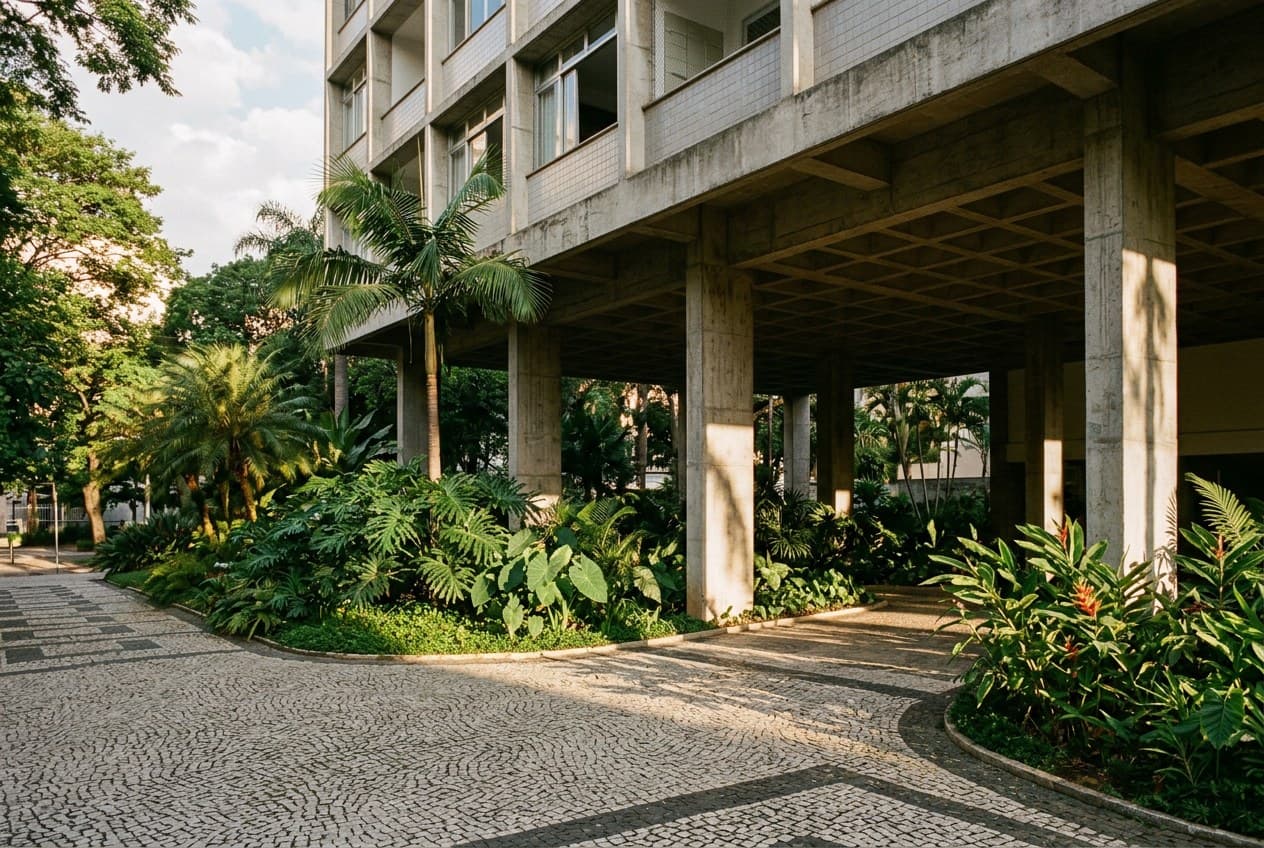
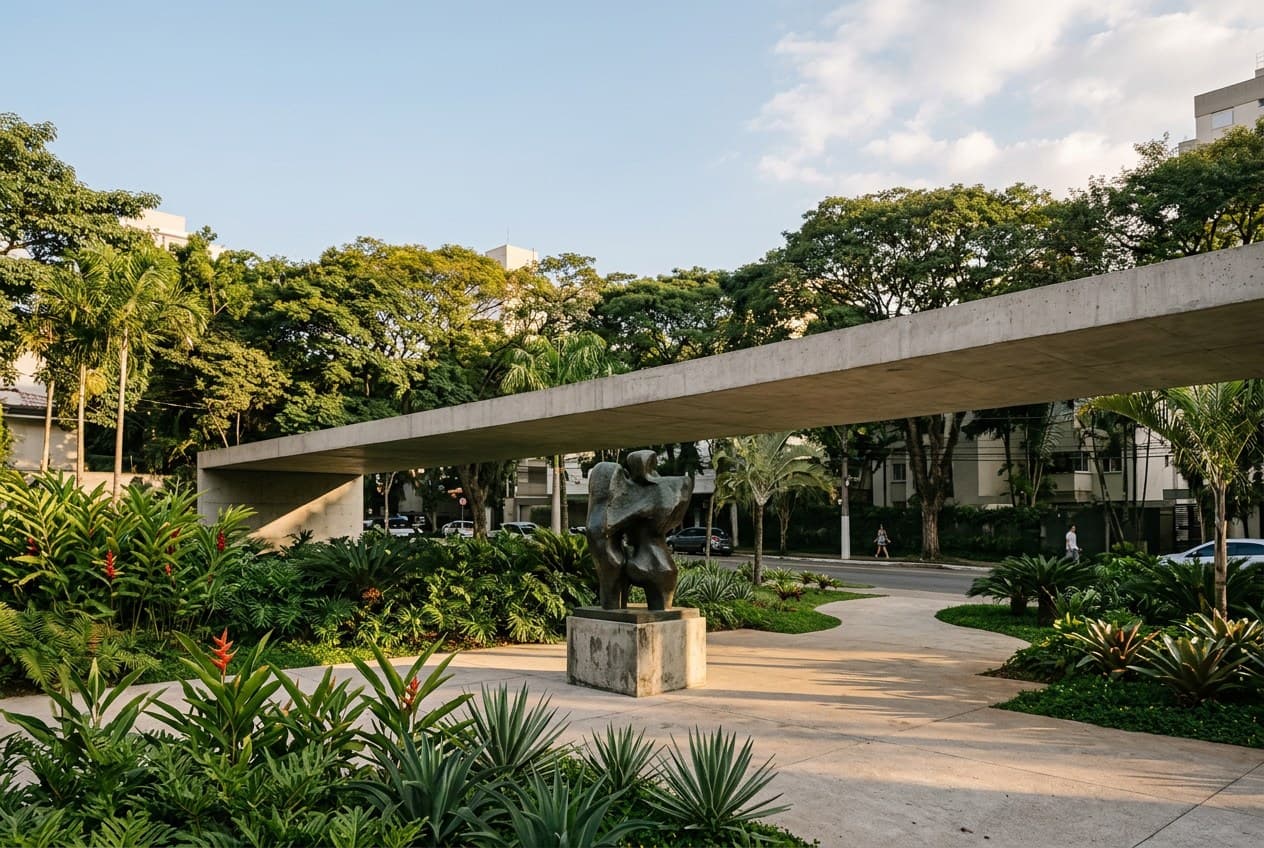
The only element that rises is the great prestressed concrete slab, with a 60-metre free span, set perpendicular to the avenue. It encloses nothing: it casts shade, marks the entrance and frames the street, and it has become the museum's signature in the neighbourhood. The whole ensemble is in exposed concrete, with no render or paint, carrying the frankness of material that defines the so-called São Paulo school.
The garden was designed by Roberto Burle Marx and only partly built, with beds of tropical plants that echo the trees on the surrounding streets. Under the slab and across the lawn, sculptures stand in the open air, and the visit begins before any door. Below, the galleries host temporary exhibitions.
In March 2018, Conpresp, the city's heritage preservation council, approved the listing of MuBE together with five other works by Paulo Mendes da Rocha in São Paulo. Among them is the gymnasium of Club Athletico Paulistano, designed with João De Gennaro, a few blocks away in Jardim América. The council justified the decision by the ensemble's contribution to the history of Brazilian modern architecture.
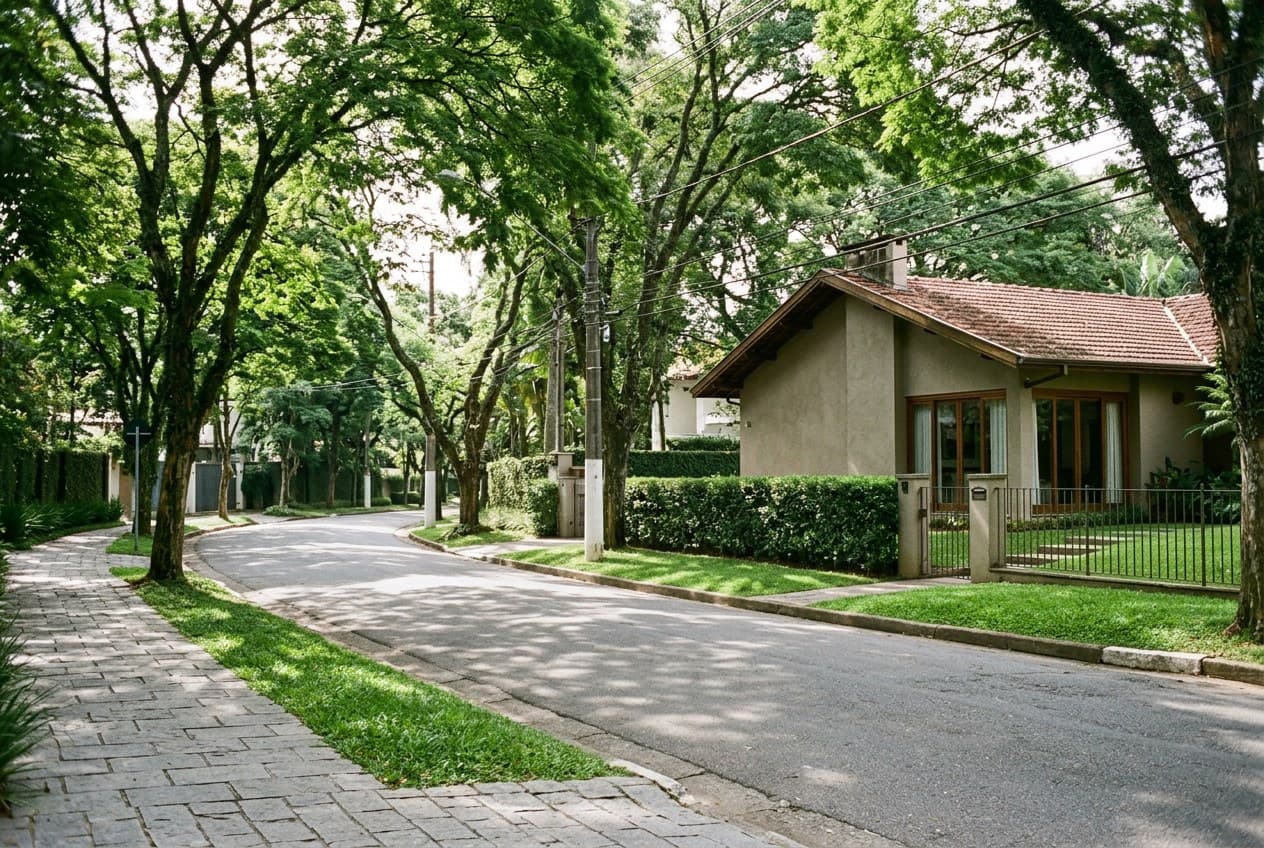
For those who live in Jardim Europa, Jardim América or the Jardins, MuBE is above all part of the neighbourhood: a shaded square on Avenida Europa, an exhibition to drop into on an unplanned Saturday, an open-air architecture lesson a few minutes from home. Living in this part of São Paulo means having close by not only tree-lined streets, but works that changed the way the city thinks about public space.
Sources
- https://pt.wikipedia.org/wiki/Museu_Brasileiro_da_Escultura_e_Ecologia
- https://www.archdaily.com/444881/museu-brasileiro-de-escultura-mube-paulo-mendes-da-rocha
- https://www.archdaily.com/pt/912325/prefeitura-de-sao-paulo-tomba-seis-obras-de-paulo-mendes-da-rocha-e-outros-32-imoveis
- https://www.tribunapr.com.br/noticias/brasil/prefeitura-de-sp-tomba-38-imoveis-entre-eles-paulistano-mube-e-pasteur/amp/
- https://www.e-architect.com/brazil/mube-sao-paulo-brazilian-sculpture-museum
- https://www.archilovers.com/projects/200022/mube-museu-brasileiro-de-escultura.html
- https://www.anualdesign.com.br/brasil/projetos/1238/mube-museu-brasileiro-da-escultura/
- https://en.wikipedia.org/wiki/Paulo_Mendes_da_Rocha
Photos · Cover: Illustrative AI-generated image, Editorial Hunter House